Your track,
measured.
Key, BPM, Camelot code, loudness, playlist fit — read from the audio itself, not the tags. Free, no account. And when release week comes — one upload builds the whole kit.
MP3 / WAV / FLAC · about a minute · deleted after analysis · no signup
Your file is analyzed and deleted. We keep numbers, not audio.
More tools below: Camelot wheel, loudness prep, playlist Radar — or head straight to the Studio if it's release week.
One upload in. The whole release out.
Track, artwork and a press photo go in. Out comes the complete release: promo assets that actually move, streaming masters, a vinyl-safe cutting master, and a day-by-day plan. Cut at the seconds that matter, in your artwork's own colours.
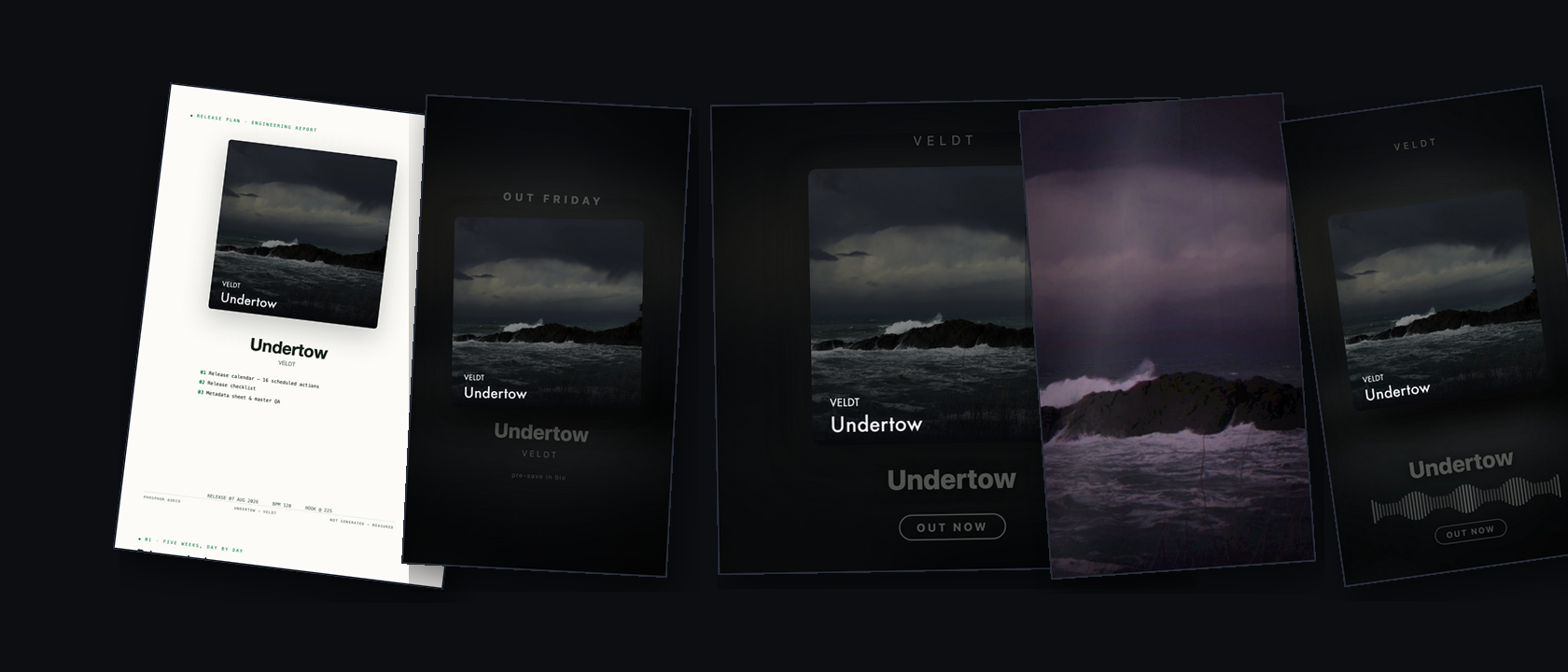
A real kit our engine built from a single track: 28 files, about ten minutes — teaser, Canvas, out-now and countdown posts, and a printed release plan. Hiring it out starts around €300.
Motion
- Three vertical teasers, cut at your detected hooks
- Spotify Canvas that loops without a seam
- Typography that moves on your beat grid
Masters
- Streaming masters at every platform's loudness
- A vinyl-safe cutting master, checked against real pressing limits
- Master QA report your engineer can read
Sound & stills
- Sped-up and slowed versions, hook snippets
- Out-now and countdown posts in your palette
- Milestone cards for release week
Words & plan
- Pitch text drafts for your own Spotify for Artists submission, grounded in Radar's sound analysis
- Printable five-week day-by-day release plan
- Distributor-to-release-day checklist
Free tools.
Three free runs per tool a day, full reports, no account needed.


Pricing
Every plan includes the Sound Watch: we re-measure playlist lineups every week and re-score your monitored tracks against them. When something moves, you get one email: a lane opened, your fit drifted, a lineup changed under you. Playlist dashboards count followers. The Watch listens.
Subscriptions
Free
A taste of every tool: your key, BPM and Camelot code, top playlist lanes, your vinyl verdict, a first full Demo Check, and 1 track on your Watch. Three free runs per tool a day.
Start analyzingStarter
The weekly lab: unlimited full results on every tool, unlimited Demo Checks while you iterate, and 3 tracks on your Watch. Reference-check plugins alone run €50–100; web checkers charge $14.99/month.
Pro
Everything in Starter, plus one kit a month (Release or Mastering; unused kits bank, up to three), 15 tracks on your Watch, and 30% off extra kits. Playlist monitoring alone is €11.99/month elsewhere, and it only counts numbers, not sound.
One-time, per release
Release Kit
The full release bundle. Hiring a designer, an editor and a mastering engineer separately starts around €300.
See what's insideMastering Kit
Streaming masters for every platform + a vinyl-safe cutting master. A vinyl cutting master alone is €60–80 at a mastering house.
Both together
Release Kit + Mastering Kit for one release: the whole rollout, audio and promo, in one folder.
Secure checkout, EU VAT handled, receipts included. Not ready to buy? The free tools give you three runs per tool a day.
Before you upload
The same math cutting rooms use
Phase correlation, loudness metering, key detection, hook recurrence. Every number on this site comes out of your signal, and the reports show the working.
Your audio stays yours
Files are processed and deleted. Playlist blueprints are statistics built from public 30-second previews, and the previews are discarded after measurement.
Honest verdicts
When a master fails a vinyl check, we say FAIL and show why. Reports you can hand to your engineer without translating.
Questions artists ask
What happens to my uploaded audio?
It lives in a temporary job folder while the analysis runs, then it's deleted. Your results page keeps the numbers (BPM, key, verdicts), never the audio.
How many free runs do I get?
Three per tool per day, full reports, no account needed. The counter resets every day. If you're working through a batch, Starter (€4.99/month) unlocks unlimited runs on every tool.
Do you pitch my track to curators or sell placements?
No. Phosphor never contacts curators, sells playlist placements or promises streams. Radar is a sound analysis of your own uploaded audio, and the pitch texts are drafts for the submission you make yourself through official channels like Spotify for Artists.
What exactly is a playlist blueprint?
A statistical profile of how a playlist actually sounds: spectral shape, timbre, dynamics, musical density, measured from public 30-second previews of its current tracks. Your track is compared against those statistics, hook to hook.
Who writes the pitch texts in the Kit?
A language model drafts them, from your track's measurements and the tags you confirm, with a hard rule: no claim without a measurement behind it. You get three drafts to edit, not a wall of adjectives.
Does the Vinyl Kit replace my mastering engineer?
No. It prepares cutting-safe files and a report that makes your engineer's day shorter. The final call at the lathe stays human.